
ENDING VIOLENCE AGAINST WOMEN AND GIRLS (EVAWG)
In 2025, FWIN made it our priority to do what we can to help end violence against women and girls in our district. A survey completed by Ulster University said that 98% of women in Northern Ireland aged 18+ have experienced some form of abuse or violence in their lifetime. The UK Secretary of State also said that Northern Ireland is the most dangerous part of the UK for women and girls.
While we know men and boys also suffer from many of these forms of violence, abuse and harm, the majority of victims are female and violence against women and girls is predominately, but not exclusively,a pattern of behaviour perpetrated by men against women which is why The Northern Ireland Executive Office is focusing on ending violence against women and girls. To put it into perspective, trends in Police Recorded Crime in Northern Ireland found that 78% of all victims of sexual offences recorded by PSNI were female. Of those convicted of sexual offences in 2021, at all courts combined, 99% were males.
When we began addressing the issue, it became clear that there was a distinct lack of understanding about what “violence against women and girls” actually means. Without understanding it, how are we supposed to stop it?
Violence against women and girls is an umbrella term used to cover a wide range of harm, abuse, and violence against women and girls because of their gender. Often when we think of violence, we think of physical assaults, however women experience many forms of non-physical violence, too. Violence against women and girls can include:
physical, sexual, psychological and emotional violence by family members, in the general community, or in institutions, including coercive control and stalking.
sexual harassment, bullying, and intimidation in any public or private space
workplace sexual harassment
online abuse including cyberstalking, sexual harassment, grooming for exploitation or abuse, image-based sexual abuse
commercial and non-commercial sexual exploitation of women and girls, trafficking, child sexual abuse, so-called honour based violence
everyday harm which includes everyday misogyny, sexist jokes and language, and discrimination
We also see issues with the justice system, sentencing, and laws in place to protect women. In 2021/22, the median number of days taken to complete cases where the main offence was a sexual offence was 742 days, the longest for any of the offence categories. Northern Ireland didn’t have a dedicated Domestic Violence law until 2021, which was later amended to recognise coercive control in 2022. That means up until that point, victims did not receive the recognition, validation, support, or protection they needed at such a vulnerable time.
During our work, we noticed there was a lot of focus on stopping domestic violence. While we acknowledge domestic violence is a very serious and important topic, it is only one part of the wider picture. If we don’t address the systemic and societal attitudes that make violence against women and girls “the norm” or “acceptable”, then issues like domestic violence will continue to rise as a result.
FWIN set out to raise awareness of the different forms of violence women experience, and provide support and education for communities to safely challenge unacceptable sexist and misogynistic behaviours. Between January - March 2026 alone, over 600 people have attended an event or programme about EVAWG, facilitated by FWIN.
We have worked with schools to help students identify healthy and unhealthy behaviours, we’ve worked with youth workers and teachers to help them understand how they influence young people’s behaviours, and we have worked with community groups to confidently identify and challenge inappropriate behaviours, and support people in their communities. We also work closely with the local council, businesses and even taxi companies, all to make our district safer.
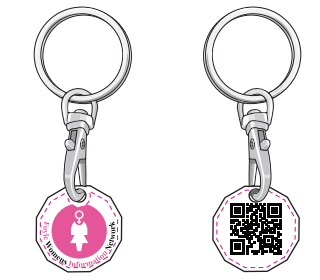
We also developed our support trolley coins - a discrete way for women to access support from services across Derry/Londonderry and Strabane, without being redirected to somewhere further away. Whether it’s help with domestic violence, support with childcare or housing, or some financial or legal advice - there is something there for everyone. This means that more women are able to access dedicated services in real time, to get the support they need. We started out with 500 trolley coins being handed out at our events and programmes, but the demand quickly grew with over 2,500 in circulation across the district in Leisure Centres, hairdressers, shops, gyms, and more. On average, the trolley coins are scanned 40 - 50 times, however the week following Amy Doherty’s murder we saw over 1000 scans which shows there is a steady need for such an important, yet simple lifeline.
If you’re interested in finding out more about the programmes we run, stocking our trolley coins in your space, or working along with us, you can contact our EVAWG Project Officer Holly Reed by calling 02871 266291 or emailing holly@fwin.org.uk.
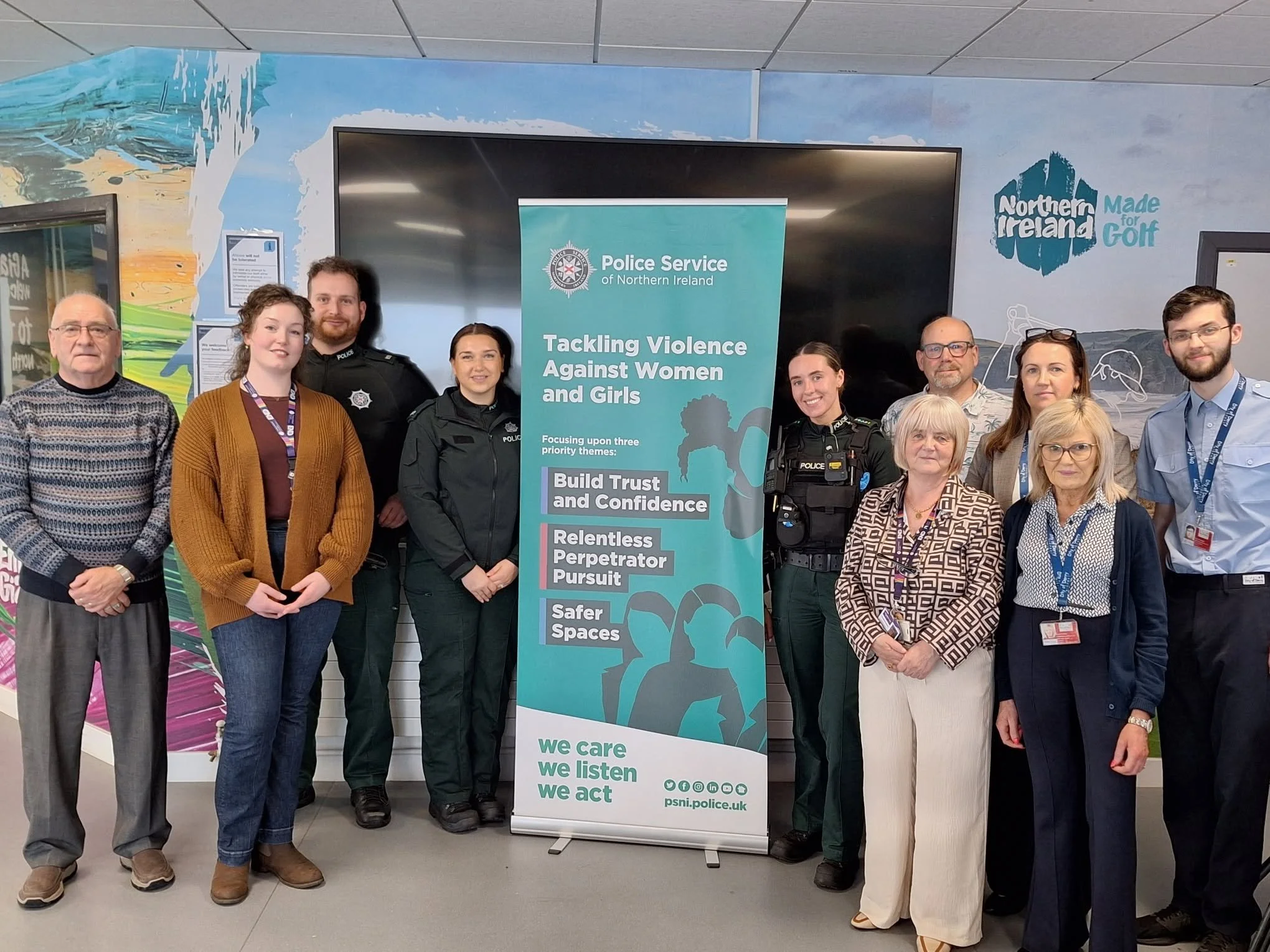
Holly spoke at a training session for City Of Derry Airport staff, faciliated by the PSNI.
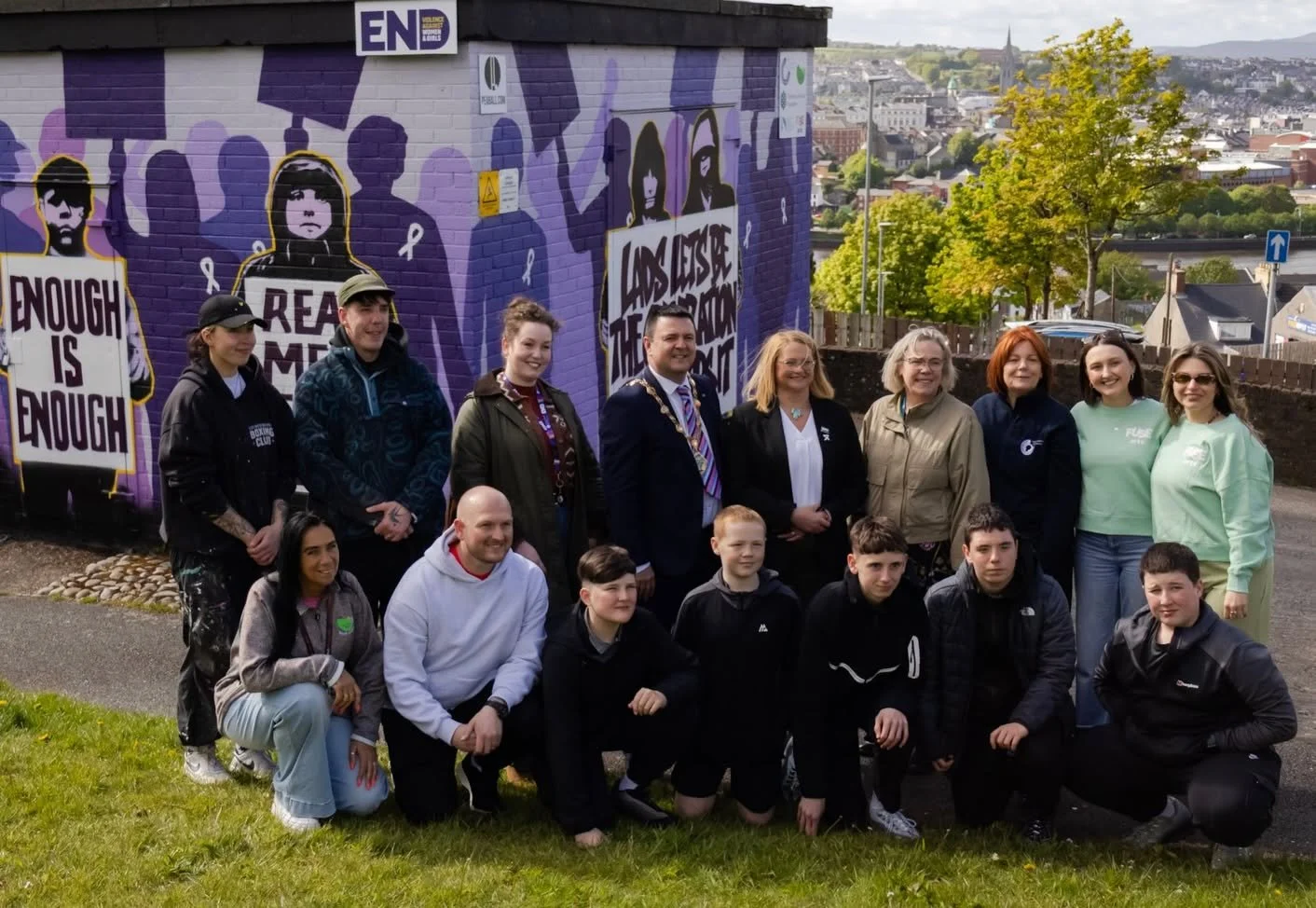
Holly worked with a group of boys from the Hillcrest Trust Youth Club to help them understand the EVAWG campaign, and how they can be a part of it. This work contributed to the creation of the mural, created by the boys in collaboration with Peaball Street Art, and FUSE Arts NI.
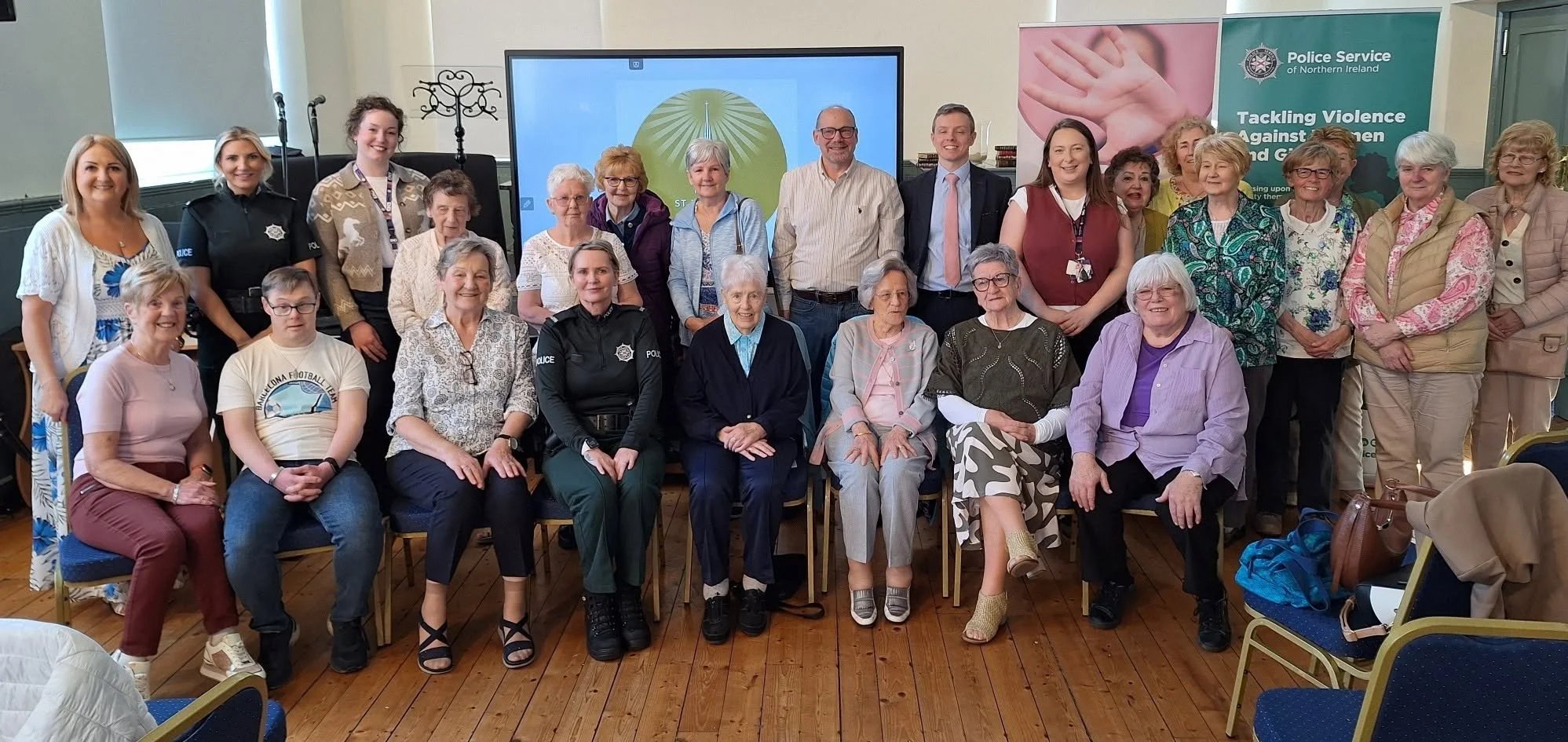
Holly spoke to the members of the St. Eugene’s Cathedral Parish Hall to raise awareness of stalking and discussed how it isn’t always an ex-partner or someone you know who is the stalker.
